


 English
 Türkçe
 русский
 العربية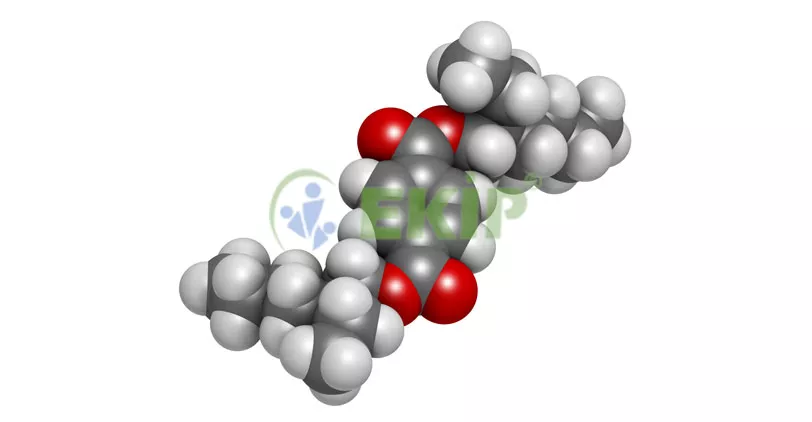
D.O.T.P (DIOCTYL TEREPHTHALATE)

DOTP SPECIFICATION
It is recommended to consider the advantages in terms of cost and quality that can be gained from using DOTP due to the explanations below and its superior properties compared to other plasticizers.
Chemical name | Dioctyl Terephthalate |
Chemical formula | C24H38O4 |
Molecular weight | 390.56 g/mol |
Appearance | Transparent and yellowish liquid |
Purity, min % | 99.0 |
Acid value, max % | 0.01 |
Water content, max % | 0.1 |
Specific gravity, g/ml (20 °C) | 0.986±0.002 |
Flash point, °C | 210 |
Freezing point, °C | -50 |
Boiling point, °C (760 mmHg) | 400 |
When comparing the physical and chemical properties of DOTP and DOP, they have almost indistinguishable characteristics. However, their differences lie within their structures. While DOTP is a terephthalate, DOP is structurally very different from orthophthalate esters like DIDP and DINP. This structural difference highlights the superior characteristics of DOTP.
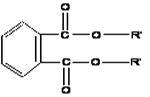
R'=alcohol
For DOP, R'=2-ethyl hexanol
For DIDP, R'=isodecyl alcohol
For DINP, R'=isononyl alcohol
Figure.1 The chemical formula of DOTP and DIDP, DINP, and DOP
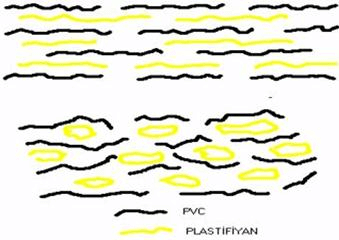
Plasticizers have much lower molecular weights compared to PVC, leading to migration into the air or any contact environments, thus shortening the lifespan of the plastic. The migration of plasticizers is inversely proportional to their molecular weight. Besides molecular weight, another factor affecting migration is the geometric compatibility of the plasticizer and PVC chain (Figure. 2).
Despite having the same molecular weight as DOP, DOTP is compatible with PVC polymer chains due to its linear structural tendency. Consequently, its migration is lower compared to DOP. In the production process, a plasticizer with high migration separates from the plastic structure. Therefore, a higher volatility rate is necessary to achieve the desired hardness. Consequently, with DOTP, the loss in gelling ovens is minimized, and the resulting product is more durable and long-lasting.
Considering all physical properties, DOTP proves to be the best among plasticizers in terms of physical and persistent characteristics.
It is used in all kinds of PVC applications, such as artificial leather, shoes, cables, hoses, and tarpaulins.
The distinct properties of DOTP compared to DOP can be summarized as follows:
1. Unlike DOP, which is restricted in many European countries for use in items that directly contact humans, such as toys, diapers, medical supplies, artificial leather, and water hoses, DOTP is not carcinogenic. You can label your product as 'CONTAINS NO CARCINOGENIC DOP'.
2. Due to its different structure from phthalate-based plasticizers, it has very low migration. As a result, materials made using DOTP last longer.
3. Due to its structure, it has low flexibility, reducing brittleness at low temperatures in plastics.
4. Owing to its structural property, it has self-lubricating characteristics. Therefore, plastisol preparation is achieved in a shorter time and with less energy.
5. The plastisol viscosity is very stable and remains unchanged for days. Consequently, it provides a product with a more uniform thickness. In contrast, the plastisol viscosity of DOP is variable, causing both time and product loss in production.
6. Due to its low volatility, DOTP can replace DINP and DIDP.
7. With low migration, there is no occurrence of "lacquer contamination," an undesirable situation where PVC-based products stick to lacquered surfaces.
8. Due to its excellent electrical properties, it is a preferred plasticizer in cable manufacturing.
